Population health and care management teams are not struggling because they lack ways to contact members. They are struggling because most outreach is executed without sufficient context. Today's reality in many health plans and managed care organizations is fragmented data, generic campaign logic, disconnected workflows, and staff assignment that is based on who is available — not who is most likely to succeed with this member, for this condition, right now.
The result is predictable: mismatched interventions, member fatigue, low response rates, and missed opportunities for early intervention. Modern engagement is a closed-loop system that continuously answers four questions: who to contact, why now, how to reach them, and who should do it. This is next-best-action outreach — not just automation, but orchestration.
Why generic outreach is failing
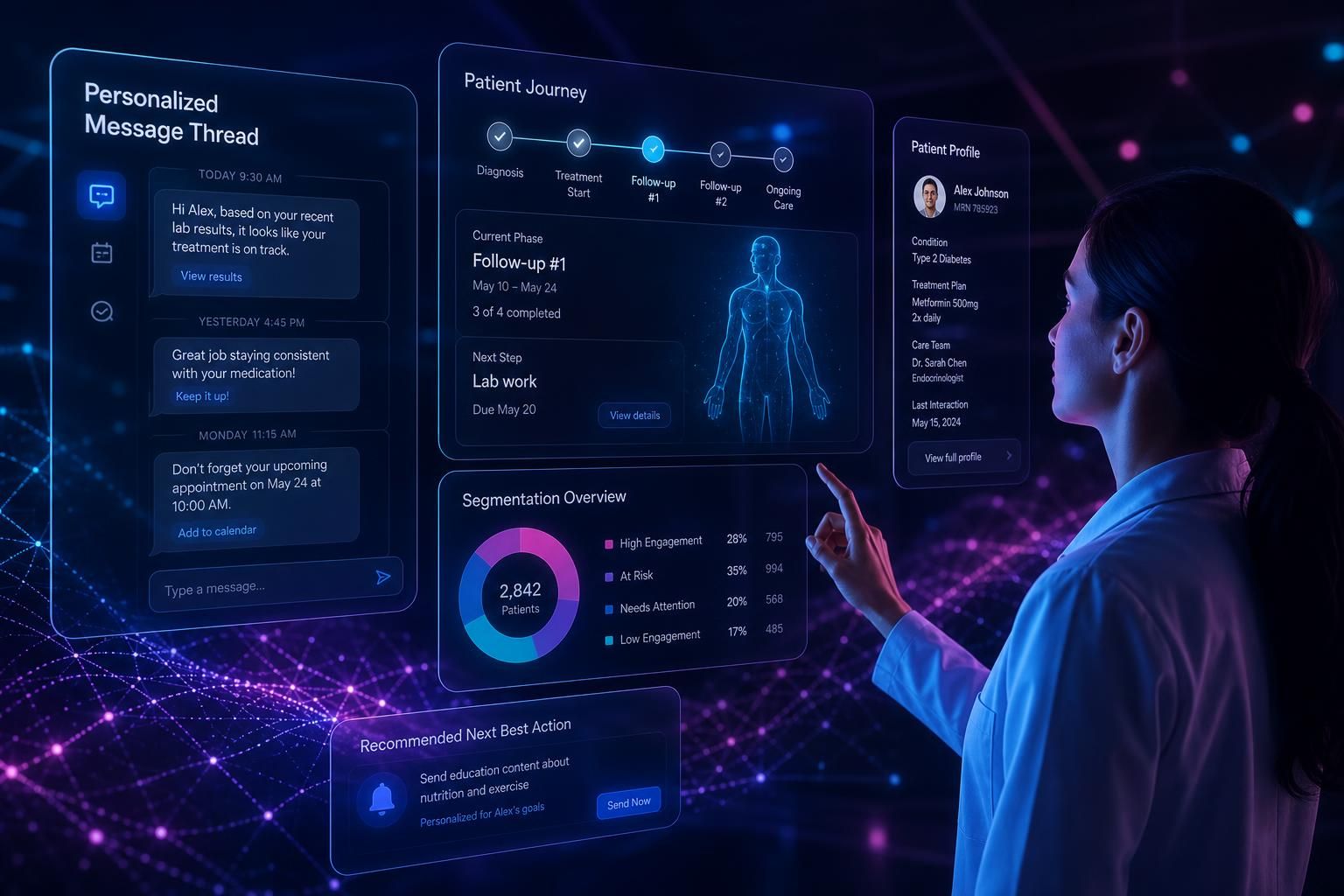
Most outreach programs still rely on a reactive paradigm built on lagging indicators and siloed triggers. The same scripts get sent at the same cadence to wildly different populations, and phone-first strategies persist even when members are far more responsive on SMS, push, or in-app messaging. When outreach arrives late or feels irrelevant, trust erodes and avoidable utilization increases.
The cost is not just operational — it is clinical. Every untimely or off-target attempt is a missed opportunity to prevent a readmission, close a care gap, or address a social need before it becomes a crisis.
What "context" actually means — technically
Context is not a buzzword. It is a computable, operational asset built from integrated, decision-grade data:
- ▸Unified member identity through deterministic and probabilistic matching across sources
- ▸Longitudinal member timeline spanning claims, encounters, meds, labs, authorizations, care plans, and prior outreach
- ▸Clinical and operational signals including ADT feeds, care gaps, HRA results, utilization patterns, SDoH risk, and benefit design constraints
- ▸Engagement telemetry capturing delivery, opens, clicks, call outcomes, and program progression
- ▸Workforce metadata including credentials, SME areas, language capability, licensure, caseload, and demonstrated performance by condition
When these are integrated, organizations move from contact attempts to measurable engagement engineering.
The orchestration loop
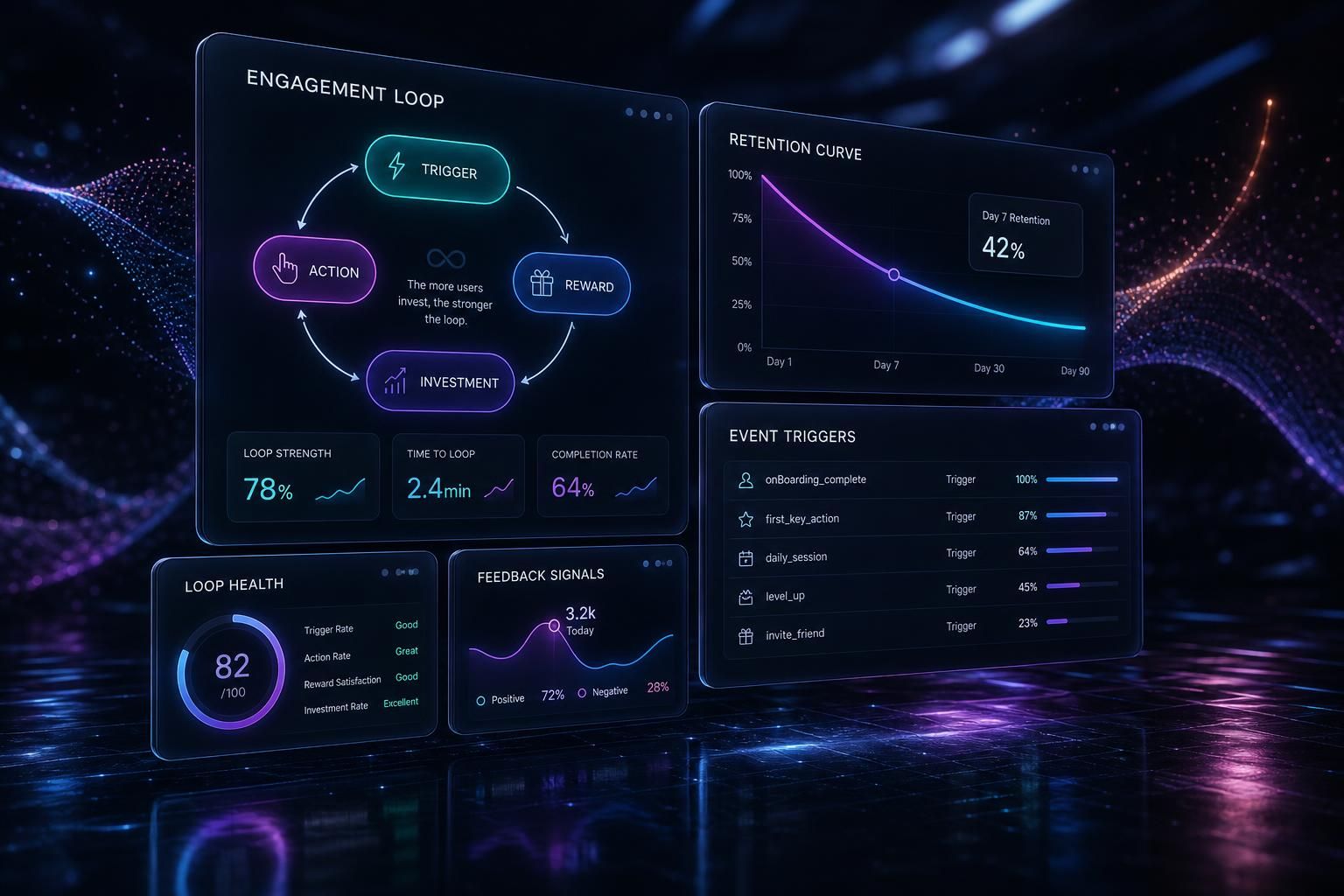
Context-first engagement is a continuous loop, not a campaign. Each step generates signals that make the next decision smarter.
1. Build a unified data foundation that supports action
A unified platform must ingest and normalize structured, semi-structured, and unstructured sources, then make them usable for workflow decisions. The goal is not dashboards alone — it is decision-grade data that drives automation and care team action, with real-time event handling for time-sensitive triggers and governance for PHI access, auditability, and role-based controls.
2. Implement next-best-action outreach logic
NBA outreach combines rules, predictive models, and operational constraints to determine the best intervention. Trigger outreach within hours of an ED discharge ADT event. Select SMS vs. phone based on prior response behavior. Choose a care-gap-specific message with condition-relevant education. Escalate to a nurse case manager when risk is high or prior attempts failed.
3. Meet members where they actually are
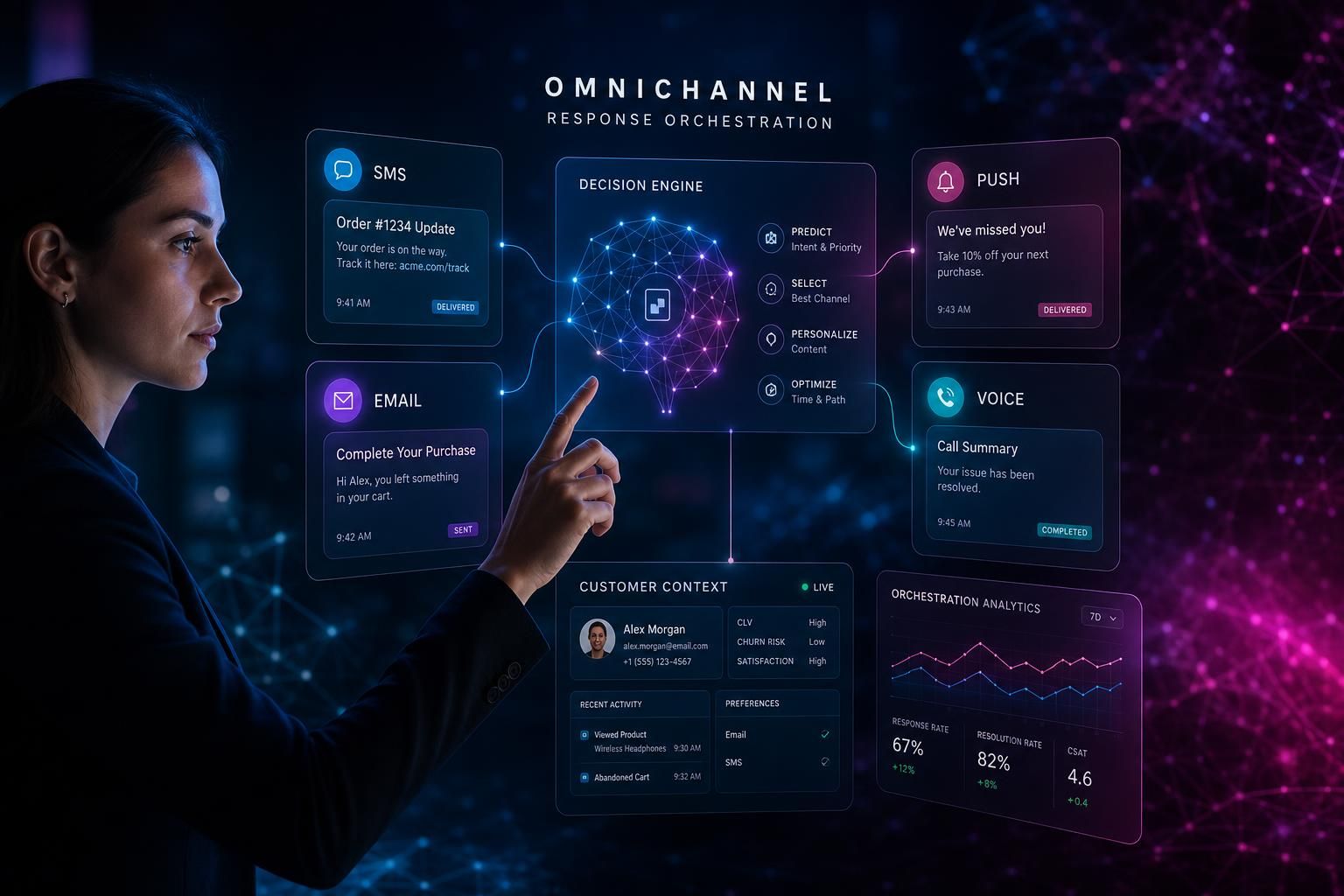
Members increasingly expect consumer-grade interactions. The technical requirement is not merely sending messages — it is capturing engagement signals and feeding them back into the orchestration layer. The lift from matching the right message to the right channel is dramatic and measurable.
4. Optimize staff assignment using data
Most organizations underutilize a powerful predictor of engagement success: the outreach resource itself. The new model treats staff assignment as an optimization problem. Which care manager has the highest predicted probability of engaging this member? Whose SME alignment best fits the clinical profile? Who has demonstrated success with similar populations — CHF, diabetes, behavioral health? This is where workforce intelligence becomes a clinical multiplier.
A worked example: best channel + best care manager for CHF outreach
Step 1 — Trigger and context assembly
Inputs include an ADT event (ED visit or inpatient discharge), recent CHF utilization, medication adherence signals, SDoH risk indicators (transportation, food insecurity), and prior outreach history. The output is a real-time CHF outreach candidate event with a complete member context bundle.
Step 2 — Predict engagement and select channel
Models estimate probability of response by channel, probability of completing the next step (e.g., scheduling follow-up), and risk of non-engagement without escalation. The system chooses the channel and cadence with the highest predicted success rate while respecting consent and compliance.
Step 3 — Assign the best-fit care manager
A multi-criteria score routes the outreach task to the care manager most likely to succeed with this member's CHF profile and engagement context. Alignment criteria can include:
- ▸Condition and cohort success — demonstrated outcomes with CHF cohorts
- ▸Clinical complexity fit — high-risk poly-chronic vs. moderate-risk experience
- ▸Program fit — transitions of care, disease management, complex case management
- ▸Licensure and scope — RN, LPN, SW, or CHW alignment to required interventions
- ▸Language and communication fit — language match, health literacy, motivational interviewing
- ▸Cultural and community context — familiarity with local resources and CBOs
- ▸SDoH navigation strength — prior success resolving transportation, food, or housing barriers
- ▸Channel effectiveness by staff — phone vs. two-way SMS vs. portal proficiency
- ▸Relationship continuity — prior positive interactions with the member
- ▸Provider and network familiarity — coordination with the member's PCP and specialists
- ▸Operational constraints — caseload, time zone coverage, after-hours availability, SLAs
Step 4 — Execute outreach and capture telemetry
Send the SMS or push with a CHF-specific message and a clear next step. If no response, automatically escalate to phone outreach by the assigned SME. Capture delivery status, call disposition, appointments scheduled, and care plan milestones completed.
Step 5 — Closed-loop learning
Feed outcomes back into channel selection models, care manager assignment optimization, and outreach content and timing rules. Engagement becomes a learning system rather than a static campaign.
Impact on managed care, member health, and care management
When context-first engagement is implemented well, organizations see measurable improvements across the board:
- ▸Care management productivity — fewer wasted attempts, better routing, less administrative burden
- ▸Member experience — outreach that is timely, relevant, and respectful of preferences
- ▸Clinical outcomes — earlier interventions, improved adherence, fewer avoidable escalations
- ▸Financial outcomes — reduced avoidable utilization and stronger program ROI
- ▸Quality performance — better closure of care gaps and downstream quality measures
A practical adoption roadmap
- ▸Unify data for action — identity resolution, longitudinal timeline, governance
- ▸Instrument engagement — capture outreach telemetry and outcomes end-to-end
- ▸Deploy NBA logic — rules plus predictive models plus operational constraints
- ▸Optimize workforce alignment — multi-criteria care manager matching as a first-class capability
- ▸Operationalize and iterate — monitor drift, measure ROI, refine continuously
The mandate: stop broadcasting, start orchestrating
Healthcare organizations cannot message their way out of fragmented data and disconnected workflows. The future belongs to teams that treat engagement as an engineered system — where context drives action, AI amplifies human expertise, and every outreach attempt makes the next one smarter.
If your organization is ready to move from reactive outreach to context-first orchestration, Brandywine Consulting Partners can help you design and implement the data, logic, and AI/ML integrations required to deliver measurable engagement and care management outcomes.
Ready to put this into practice?
BCP partners with healthcare and life sciences leaders to translate strategy into shipped, secure systems. Let's talk about your next initiative.
Talk to BCP