For decades, the most advanced healthcare IT was reserved for the largest hospital systems and pharma giants — the only organizations with the capital and staffing to absorb enterprise platforms. That gap is closing fast. Cloud-native architectures, managed services, and modern delivery practices have put genuinely cutting-edge capability within reach of small and mid-sized providers, payers, and life sciences organizations.
At Brandywine Consulting Partners, we work exclusively with healthcare organizations on this transition. This article covers the high-leverage moves we see produce the biggest impact for SMB healthcare clients.
Move Beyond "Lift and Shift" Cloud
Many SMB healthcare organizations have already moved workloads to Azure or AWS — but most stopped at lift-and-shift. The bigger gains come from the next step: re-platforming onto managed services that reduce operational burden and unlock elasticity.
Concrete examples we see deliver value quickly:
- ▸Replacing self-hosted SQL Server with Azure SQL Managed Instance to eliminate patching and backup overhead
- ▸Moving custom file processing pipelines onto serverless functions and event-driven workflows
- ▸Adopting Azure API Management to standardize integration with payer and provider partners
- ▸Using managed identity instead of credential-based authentication to eliminate an entire class of breach risk
Build for Interoperability from Day One
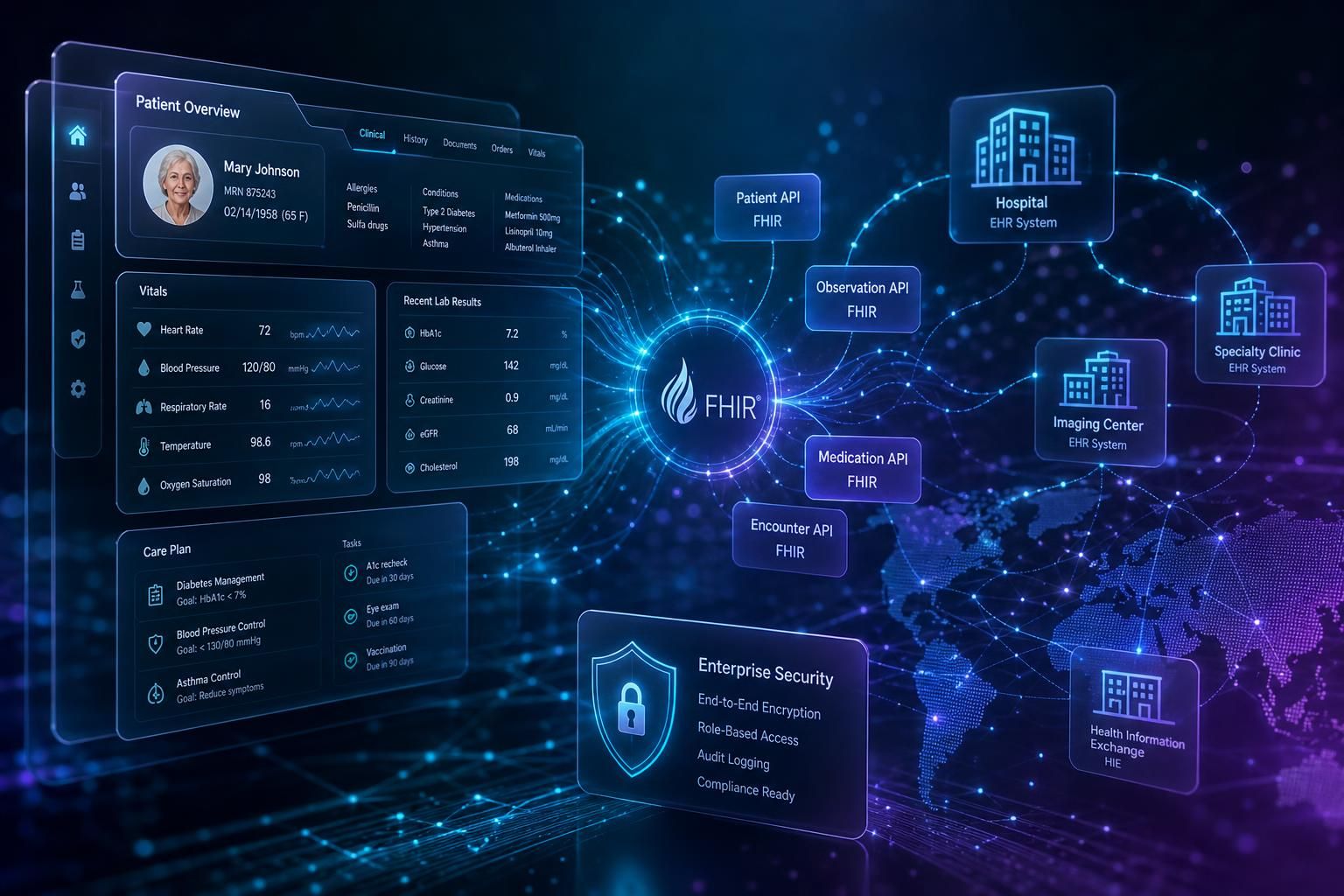
The healthcare data landscape is fragmenting and consolidating at the same time. New CMS interoperability rules, FHIR adoption, and the rise of patient-facing data sharing all mean every system you build today will need to exchange data tomorrow. Designing around standards-based APIs (FHIR R4, HL7 v2 where required, SMART on FHIR for app integration) avoids painful retrofits later.
Take HIPAA and HITRUST Seriously — But Not Painfully
Compliance is non-negotiable, but it does not have to be the bottleneck people imagine. The organizations that ship fast in healthcare have automated their compliance posture: encryption by default, centralized logging, automated access reviews, infrastructure baselines that ship with controls already in place.
We help clients build a "compliance flywheel" where every new system is born compliant rather than retrofitted into compliance after the fact.
Modernize the Analytics Layer
Decision-makers in healthcare are operating on data that is, on average, days or weeks old. That is no longer competitive. Modern analytics platforms — Power BI, Tableau, Sisense, Databricks — paired with a properly designed semantic layer can put real-time KPIs in front of leadership.
The key word is "properly designed." A modern tool dropped on top of dirty data produces fast, beautiful, wrong dashboards. The investment must include data modeling, governance, and the engineering rigor that makes the numbers trustworthy.
Add Intelligence Where It Matters
AI and machine learning have moved past the hype cycle into practical, deployable solutions for healthcare. The wins we see most often are not glamorous research projects — they are unglamorous operational wins:
- ▸NLP-powered extraction of structured data from clinical documents
- ▸Predictive models that flag patients at risk of readmission or no-show
- ▸Automated coding suggestions that reduce charge capture leakage
- ▸Conversational interfaces that take routine workflows off staff plates
Our AI / ML practice focuses on production-grade deployments, not pilots that never ship.
Choose Partners Who Speak Healthcare
The single biggest predictor of success on a healthcare IT initiative is whether the team building it actually understands healthcare. Generalist consultants can deliver software, but they cannot anticipate the regulatory, clinical, and operational nuances that determine whether a system gets adopted in the field. BCP exists for this reason: every engineer, architect, and analyst on our team focuses exclusively on healthcare and life sciences.
A Practical Starting Point
If this all feels like a lot, start small. Pick one workflow that is painful today, scope a 90-day initiative around it, and apply the principles above: modern cloud platform, standards-based integration, built-in compliance, trusted analytics, and a healthcare-fluent partner. The compounding effect of even one such project is significant — and it builds the organizational muscle for the next one.
Ready to put this into practice?
BCP partners with healthcare and life sciences leaders to translate strategy into shipped, secure systems. Let's talk about your next initiative.
Talk to BCP